Checking on Aging Parents
How to Check On an Elderly Parent Who Lives Alone (Without Hovering)
By The Cozy Check-ins team·Last updated October 1, 2026
If you've ever finished a phone call with your mom or dad, set the phone down, and still wondered whether I hope they're really okay — you're not alone, and you're not being dramatic. Loving a parent who lives by themselves means carrying a quiet question into most days: Are they alright today?
You're not alone in this: 26% of adults 65 and older lived alone in 2023 (Pew Research Center, December 2025).
The good news is that you don't have to choose between two extremes — calling six times a day until they feel watched, or crossing your fingers and hoping. There's a calmer middle path, and it starts with a simple idea: you can stay close to your parent without taking over their life.
Quick answer: the gentlest ways to check on a parent living alone
The most respectful way to check on an elderly parent who lives alone is to build a light, predictable rhythm of contact that they help design — a daily hello, a shared routine with siblings or a neighbor, and one simple check-in signal — rather than constant calls or monitoring they didn't ask for. The goal isn't to watch them. It's to make sure that on any given day, someone knows they checked in — including them knowing that you care.
Start with respect, not a rescue plan
It's easy, when we love someone, to slide into "fixing" mode. But most older adults aren't looking to be rescued. They've raised families, run households, weathered decades of life. What they want is to stay themselves: capable, in charge of their own day, the parent in the relationship.
So before you set anything up, start from a simple belief: your parent is an adult who deserves a say in how they're supported. That one shift turns "I need to keep tabs on Dad" into "Dad and I are going to figure out a way for me to worry less — together." The supports people actually keep using are the ones they chose.
Notice what you're really worried about
"I worry about Mom" usually has a more specific shape underneath. Naming it helps you pick the right kind of help:
- A day passing where no one would know if something happened.
- Your parent feeling lonely or disconnected, especially since losing a spouse or friends.
- The distance — that you live too far to just swing by.
- That your parent is too proud to call when they're having a hard day.
Worry about "no one would know" calls for a simple daily signal. Worry about loneliness calls for more moments of warm contact. Distance calls for a local circle — and maybe a trusted neighbor.
Seven respectful ways to stay close
- Agree on a regular time to be in touch, rather than calling whenever you're worried. A simple "we'll touch base each morning" beats random anxious calls.
- Use the lightest tool that works. A quick text, a thumbs-up, a single tap — seconds, not a 20-minute call they may not have energy for.
- Share the job with siblings. Split the week so no one person does it all, and your parent isn't hearing from everyone at once.
- Enlist a trusted neighbor. Someone who can wave over the fence — or walk over — is worth a great deal, especially from a distance.
- Anchor contact to things they enjoy. A morning coffee call, a "did you watch the game?" text. Contact feels better to them when the conversation is about their interests.
- Make a calm "if we can't reach them" plan. Decide in advance who calls whom, so a missed call doesn't spark panic.
- Let the daily check-in carry the daily signal. A once-a-day check-in frees the rest of your contact to be about love and life.
How a simple daily check-in works (no app for your parent)
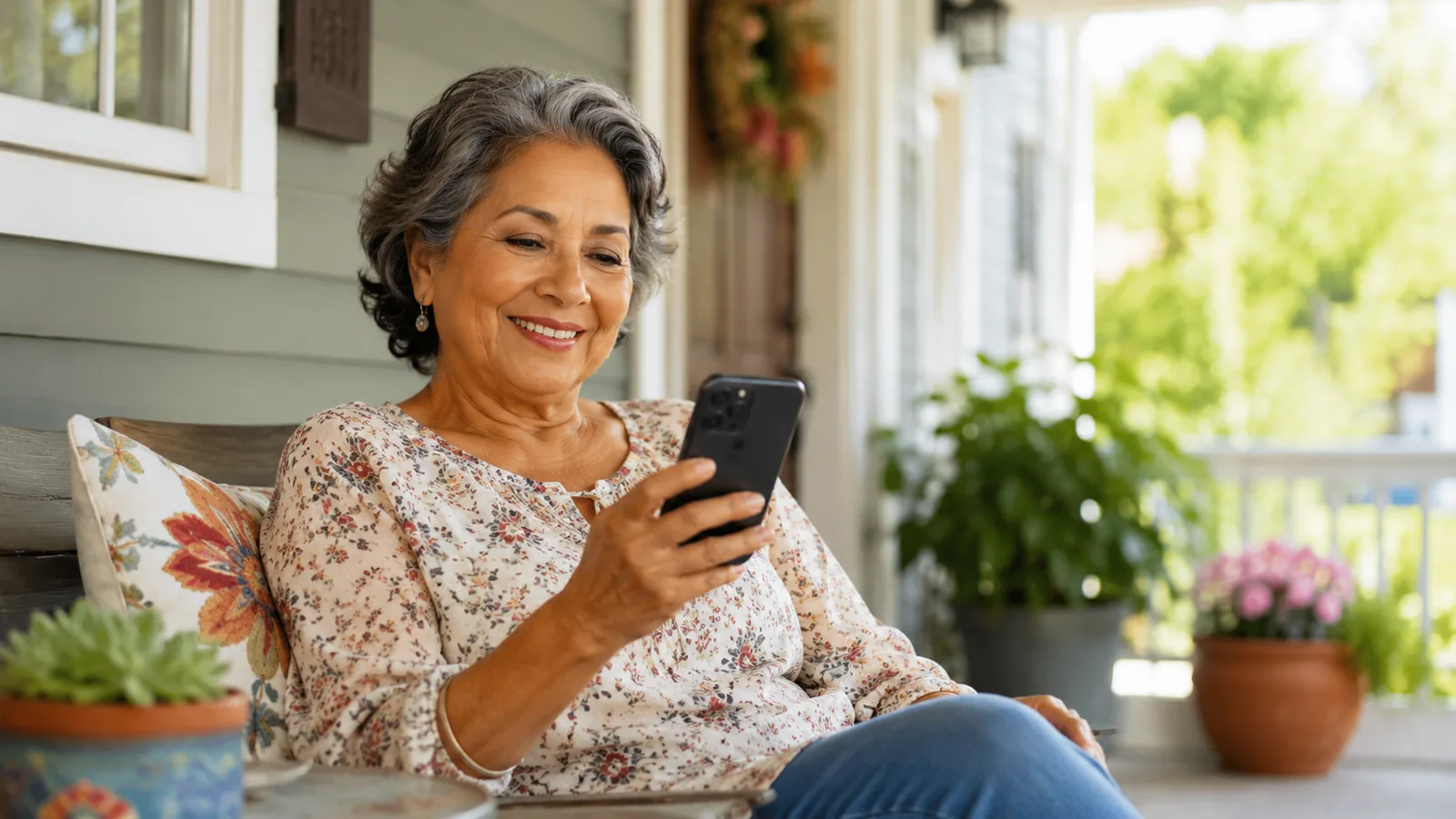
You can set up a gentle daily check-in without asking your parent to download an app, create a login, or learn anything new. On their end, it's just one tap on a text. You'll manage it all from your phone's browser — and an optional Cozy app with extra features is on the way.
Here's the idea behind Cozy Check-ins: you set it up in about five minutes. Each morning, your parent gets one friendly text with a single big button — one big button they tap to check in for the day. That's the whole job on their end. One tap. No login, nothing to figure out.
When they tap it, the people you choose — their Circle — simply know they checked in. If your parent ever misses their check-in, the Circle is let know so someone can reach out. And because it's the parent who taps, they stay in control. No GPS, no cameras, no health data — just a daily hello and a quiet "all's well." That's the difference between being watched and staying connected.
For families spread across the country, or out in rural areas, you can even add a trusted neighbor to the Circle — a real person who can walk over if needed.
How to talk to your parent about it
- Lead with your feelings, not their limitations. "I'd sleep better knowing we say good morning each day" beats "You're getting older and I need to keep an eye on you."
- Offer it as theirs. "It's one tap, and you're the one who sends it. I'm not checking up on you."
- Make it mutual. "I'll text you back so you know I'm okay too."
- Let them say no — and revisit later. Mention it once, then leave it. Patience usually wins.
Build a calm plan for the "what if"
Decide ahead of time what a missed check-in means for your family: first a quick call, then a text to a sibling, then a neighbor knocking on the door. Writing it down means nobody has to decide what to do in the moment.
And to be clear about what a check-in is and isn't: a daily check-in is a non-medical way to stay connected and reassured. It is not an emergency service, a medical alert, or a substitute for 911. If you believe your parent is having an emergency, call 911 right away. Think of a daily check-in as one calm layer in your family's plan.
If cost is on your mind, the next part of this series looks at whether there's a free way to check on a parent every day. And if you want a wider view — how a small circle of family, neighbors, and a community group can share the load — see our piece on supporting an older adult who lives alone.
The quiet payoff
When this is set up well, you spend less of the day worrying. You see your mom tapped her button, and your morning gets lighter. Your calls go back to being about the ballgame and the grandkids — not "did you take your pills, are you okay." You get to be the son or daughter again, instead of the supervisor. And your parent gets to keep being exactly who they are: independent, in charge, and loved — stayed in touch with, not supervised.
That's the whole idea. A warm hello, every day. Peace of mind for you. Dignity for them.
A gentle note: Cozy Check-ins is a daily check-in tool that helps families stay connected. It is not a medical, monitoring, or emergency service and should not be relied on for emergencies. In an emergency, call 911.
Frequently asked questions
- How often should I check on an elderly parent who lives alone?
- For most families, once a day is a comfortable baseline — enough to know they checked in, not so much that it feels like hovering. The right rhythm is the one you and your parent agree on together.
- How do I check on my parent without making them feel watched?
- Let the check-in be something they do, not something done to them. A signal your parent sends themselves keeps them in control. Avoid location tracking or cameras, which can feel like surveillance and erode trust.
- What if my parent doesn't have a smartphone?
- Your parent just taps the button right in their daily text, so the text needs a phone that can open a text link — most smartphones work with no app to install. If your parent doesn't have a smartphone, Cozy can call them instead: a short automated call each day, and they press 1 to check in. That works on a landline or a basic cell phone (US only).
- Is a daily check-in the same as a medical alert?
- No. A medical alert summons help in an emergency. A daily check-in is a non-medical daily signal from your parent. They do different jobs, and many families use both.
- What happens if my parent misses a check-in?
- The family Circle you've chosen is let know so someone can reach out. It's not an emergency response — it's a nudge to a real person who cares. Keep a simple "if we can't reach them" plan, and call 911 in a true emergency.
The Cozy Check-ins team
Cozy Check-ins is a daily check-in for older adults — one tap in a daily text, or a short daily phone call for a parent without a smartphone. No app needed for them (an optional app is coming — always optional).
More from the blog
Checking on Aging Parents
My Parent Doesn't Have a Smartphone. Can a Daily Check-In Still Work?
About one in five adults 65+ still doesn't own a smartphone. A daily check-in can still work for them: one short automated call, press 1. Here's exactly what the call says, what happens if they don't answer, and the free programs worth checking.
September 19, 2026

Checking on Aging Parents
My Parent Can't Drive Anymore. How Do They Get to Medical Appointments?
The car keys are gone, and the appointments aren't. Here's where rides to medical appointments actually come from — Medicaid, Medicare, PACE, paratransit, volunteers and phone-booked rides — and who pays.
September 16, 2026
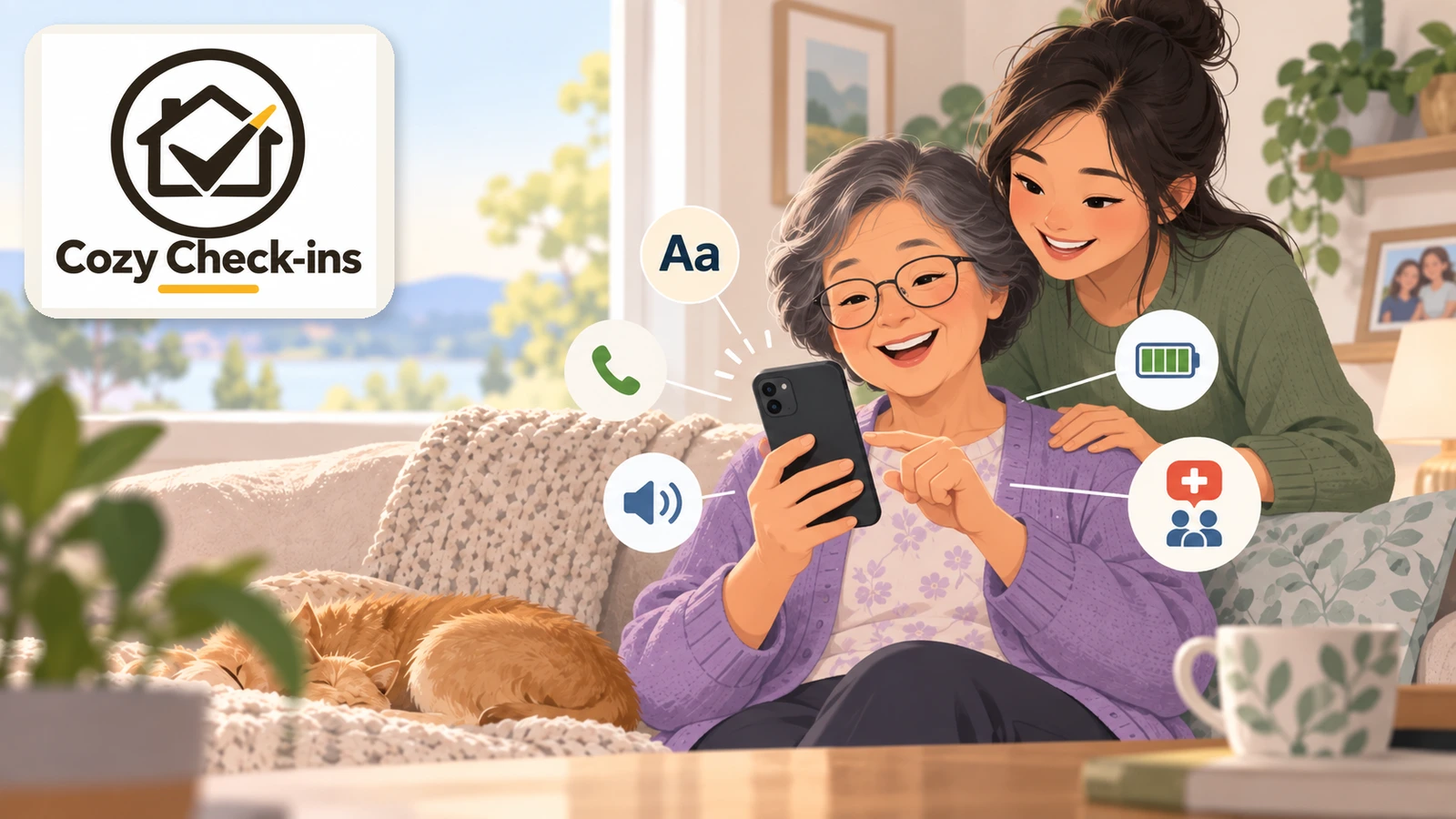
Checking on Aging Parents
Phones for Seniors: How to Choose One Your Parent Will Actually Use
There isn't one best phone for every older adult — but there is a best way to choose. Start with what your parent actually does with a phone, then pick the simplest thing that does exactly that.
September 16, 2026